
- Are all cryptocurrencies based on blockchain
- All the cryptocurrencies
- Why do all cryptocurrencies rise and fall together
What is the market cap of all cryptocurrencies
Digital currencies also enable instant transactions that can be seamlessly executed across borders. For instance, someone in the United States may make payments to a counterparty in Singapore using digital currency, provided they are both connected to the same network boyd rewards online.
Much of this may not mean anything to you if you only have a cursory knowledge of how cryptocurrencies work. Suffice it to say that not every project marketed as a cryptocurrency project meets all six of the criteria. Libra is a good example.
The crypto market is huge, and it follows different rules, but it doesn’t mean it’s the same for all the cryptocurrencies available on it. When we talk about it, the first thing that crosses our minds is Bitcoin and its huge role in the world. It was the first virtual currency launched more than a decade ago, so it’s understandable that people recognize it the most, and it’s possible that most of them can’t name more than two currencies. But, there is a lot more than that – according to many sources, the total number of digital money is 6,955, but some of them failed and aren’t active right now. Another source says that the complete number is around 5,000 and that’s really a lot, knowing that we only recognize barely 10 of them.
At least in its initial launch, Libra will not be completely decentralized. Facebook has said it will be several years before the Libra Association gains full and complete independence. Until then, Facebook will still control the project. For as long as they do, Libra will not be decentralized.
Are all cryptocurrencies based on blockchain
Cryptocurrency is a medium of exchange, created and stored electronically on the blockchain, using cryptographic techniques to verify the transfer of funds and an algorithm to control the creation of monetary units. Bitcoin is the best known example.
Cryptocurrency has grown far beyond just Bitcoin. As the industry continues to evolve, there are now thousands of different digital assets serving different purposes. Some are designed for fast payments, while others offer access to decentralised services, private transactions, or even decision-making within a project.
Although blockchain announcements are less frequent and happen with less fanfare than they did a few years ago, blockchain technology has the potential to result in a radically different competitive future.
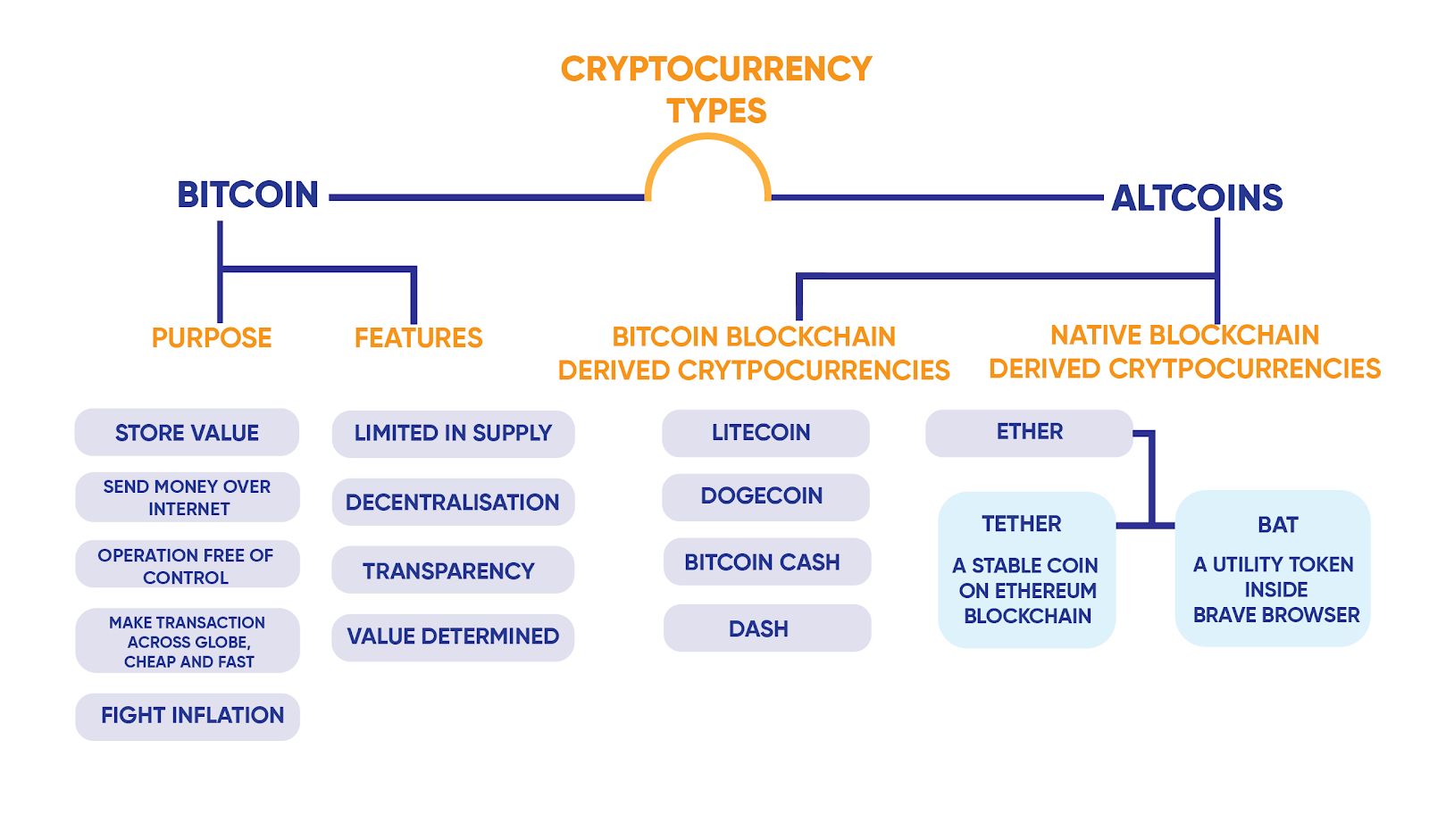
Cryptocurrency is a medium of exchange, created and stored electronically on the blockchain, using cryptographic techniques to verify the transfer of funds and an algorithm to control the creation of monetary units. Bitcoin is the best known example.
Cryptocurrency has grown far beyond just Bitcoin. As the industry continues to evolve, there are now thousands of different digital assets serving different purposes. Some are designed for fast payments, while others offer access to decentralised services, private transactions, or even decision-making within a project.
Although blockchain announcements are less frequent and happen with less fanfare than they did a few years ago, blockchain technology has the potential to result in a radically different competitive future.
All the cryptocurrencies
The cryptocurrency was invented by an anonymous individual or group of individuals using the pseudonym Satoshi Nakamoto, who introduced Bitcoin in a white paper published in 2008. The identity of Satoshi Nakamoto remains a mystery, but their groundbreaking invention has inspired the development of numerous other cryptocurrencies. To learn more about Satoshi Nakamoto, read our in-depth article at
People invest in cryptocurrencies for various reasons, including financial freedom, supporting blockchain technology, participating in decentralized finance (DeFi) ecosystems, exploring new investment opportunities, owning digital collectables (NFTs), hedging against traditional markets, and fostering global economic inclusion. These unique qualities and potential offered by digital assets attract individuals seeking to diversify their portfolios and contribute to technological innovation.
On the other hand, tokens are digital assets that are not native to a particular blockchain but are created on existing blockchain platforms, typically through tokenization. Tokens can represent various types of assets, such as utility tokens, security tokens, or non-fungible tokens (NFTs). They can be easily created using templates, where developers specify parameters like initial supply, number of decimals, and other metadata. Most tokens are created on established blockchain networks like Ethereum, using standards such as ERC-20 for fungible tokens and ERC-721 for non-fungible tokens.
Why do all cryptocurrencies rise and fall together
Cryptocurrency prices often reflect broader economic trends. Global economic conditions, inflation, and interest rates significantly influence the cryptocurrency market. Bitcoin, in particular, has gained attention as a potential hedge against inflation. Let’s explore how these factors shape cryptocurrency price movements.
Cryptocurrency prices change rapidly due to factors like investor emotions, market news, and trading volume. Since the market operates 24/7, prices can shift at any time. Limited regulation and speculative trading also add to the unpredictability.
Government policies can either boost or hurt cryptocurrency prices. Positive regulations, like legalizing crypto, often increase demand. On the other hand, bans or heavy restrictions can lead to price drops as investors lose confidence.
Bitcoin halving reduces the number of new coins miners receive, limiting supply. With demand often staying the same or increasing, prices tend to rise over time. Historically, Bitcoin has seen significant growth 12-18 months after a halving.
To evaluate the social presence, you can look at the Crypto Fear and Greed Index, which uses social activity as a calculation metric. However, the index gives you a picture of the broader market rather than pointing to a specific crypto.